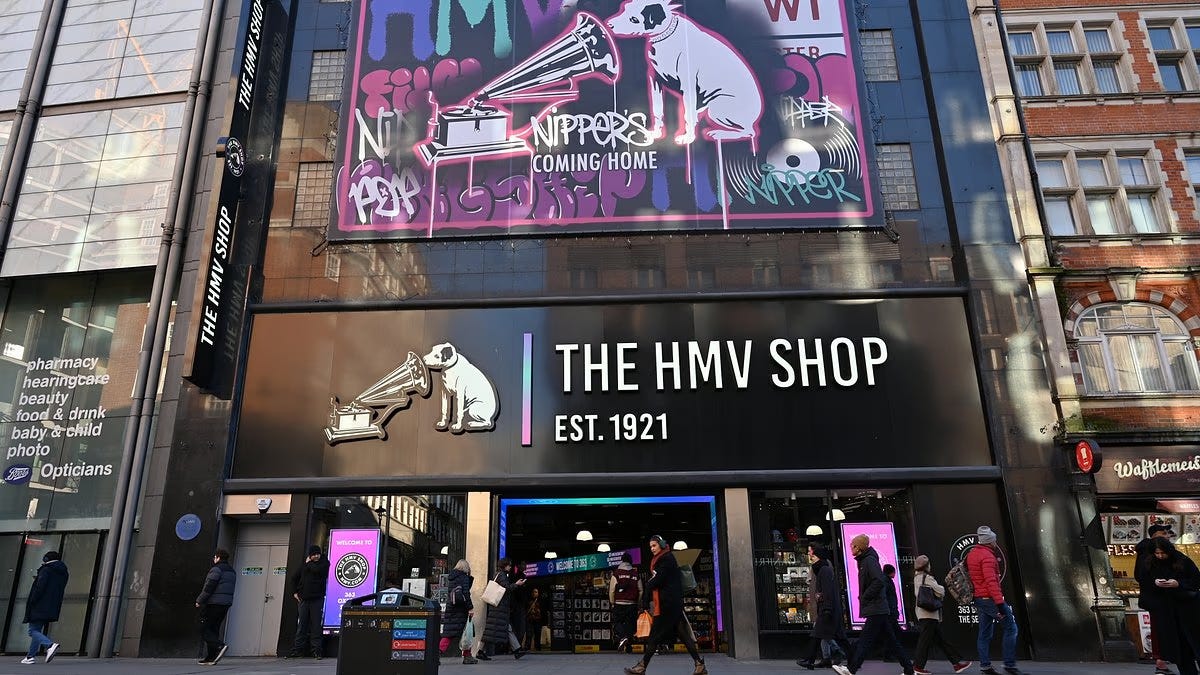
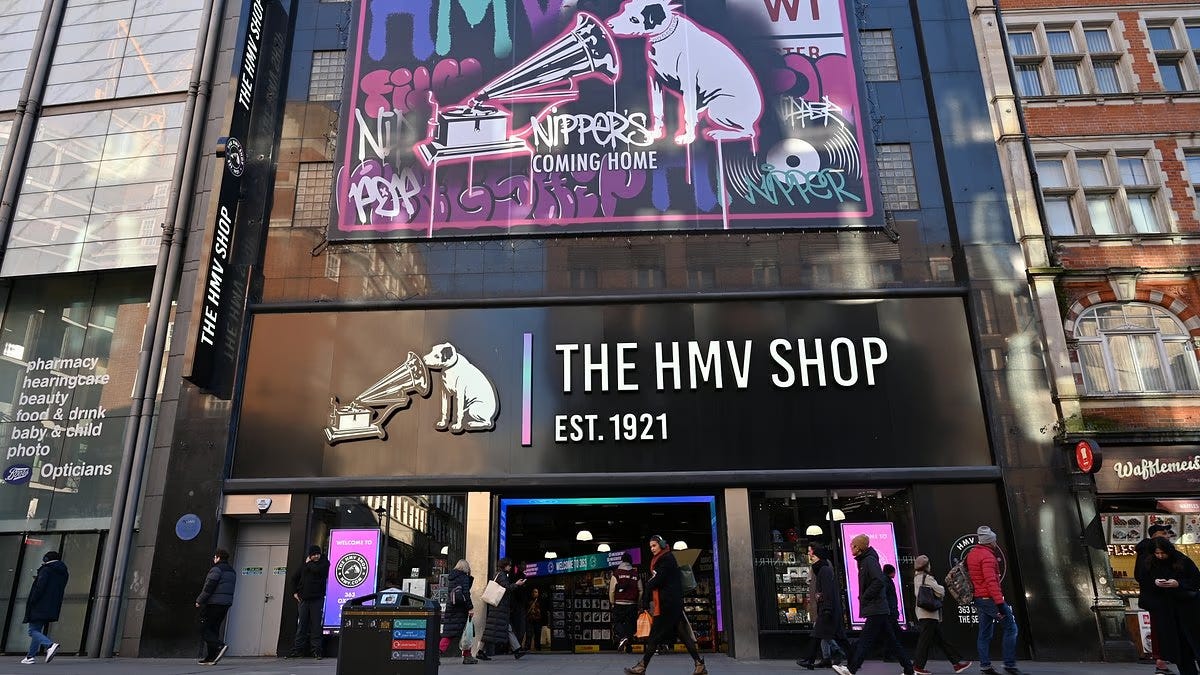
Wasn’t quite sure about this news. And it’s also a terribly sad indictment on the state of retail whenever a much coveted brand such as HMV shutters its flagship on Oxford Street, citing a doubling of rent as the reason.
And the irony? In just two weeks time, Oxford Street will open up for (pedestrian) business for the first time in its history.
The music stops on Oxford Street, just as the traffic does
On 26 October, the stretch of Oxford Street between Orchard Street and Great Portland Street goes car-free. The buses go. The taxis go. In their place, City Hall promises a world-class boulevard where shoppers can finally wander without dodging a double-decker.
Two weeks earlier, one of the street’s most famous names told us it was leaving.
HMV will shut its flagship at 363 Oxford Street in March 2027. The reason is blunt: the landlord wants to double the rent, and the building needs major renovation on top. Managing director Phil Halliday said it was “frustrating that it has been made commercially unviable.” That is a polite way of putting it.
A store that keeps coming back
This is not just any shop. HMV first opened at 363 Oxford Street in 1921. It closed in 2019 when the chain fell into administration, and for a while the windows sold American sweets. Doug Putman’s rescue brought HMV home in November 2023.
And here is the thing: HMV is not failing. Sales are up 15% in the first nine months of 2026. Revenue across its 123 UK shops and online is heading for £240 million, up from £212 million last year. Vinyl, CDs and fan merchandise are pulling people through the doors.
This is a retailer doing exactly what we keep saying the high street needs. It gives people a reason to visit. It still cannot make the numbers work on Oxford Street.
The irony nobody can miss
Pedestrianisation is meant to be Oxford Street’s big reset. Wider pavements, cleaner air, longer dwell times, more spend. The Oxford Street Development Corporation took over planning powers in August. A trial layout starts this month, with permanent changes expected by the end of 2027.
But regeneration lifts rents long before it lifts takings. Landlords price in the footfall they expect tomorrow. Retailers have to pay for it with the sales they make today.
So HMV is being priced out of the very boulevard that is supposed to save the street. If a growing business with a century of history on the site cannot afford to stay, who exactly is the new Oxford Street for?
Costs coming from every direction
Rent is only one line on the bill. Since April 2025, employers have paid 15% National Insurance on a bigger slice of every wage. Since April 2026, every business property in England has a new rateable value. Those valued at £500,000 or more now pay a higher multiplier of 50.8p in the pound, against 43p for smaller shops.
Big flagship stores on prime streets are precisely the ones caught. When that surcharge was still being debated, High Streets UK warned that up to 600 units on flagship high streets were at risk, and more than 200 could close for good. The British Independent Retailers Association says its members’ rates bills rose 15% on average this year.
Add the annual minimum wage rise and energy costs, and the margin on the most expensive street in Britain gets very thin, very quickly.
HMV says it wants to stay in the West End and is hunting for a new flagship. Its 50-odd staff will be offered roles at its two other London stores and head office. Good. But the lesson for landlords and policymakers is bigger than one record shop.
You can close a road to traffic. You can lay new paving and plant trees. But if the makeover simply hands landlords a reason to double the rent, Oxford Street will end up as a beautiful, car-free parade of empty units and sweet shops. Again.
The music is still playing at HMV. It just won’t be playing on Oxford Street.