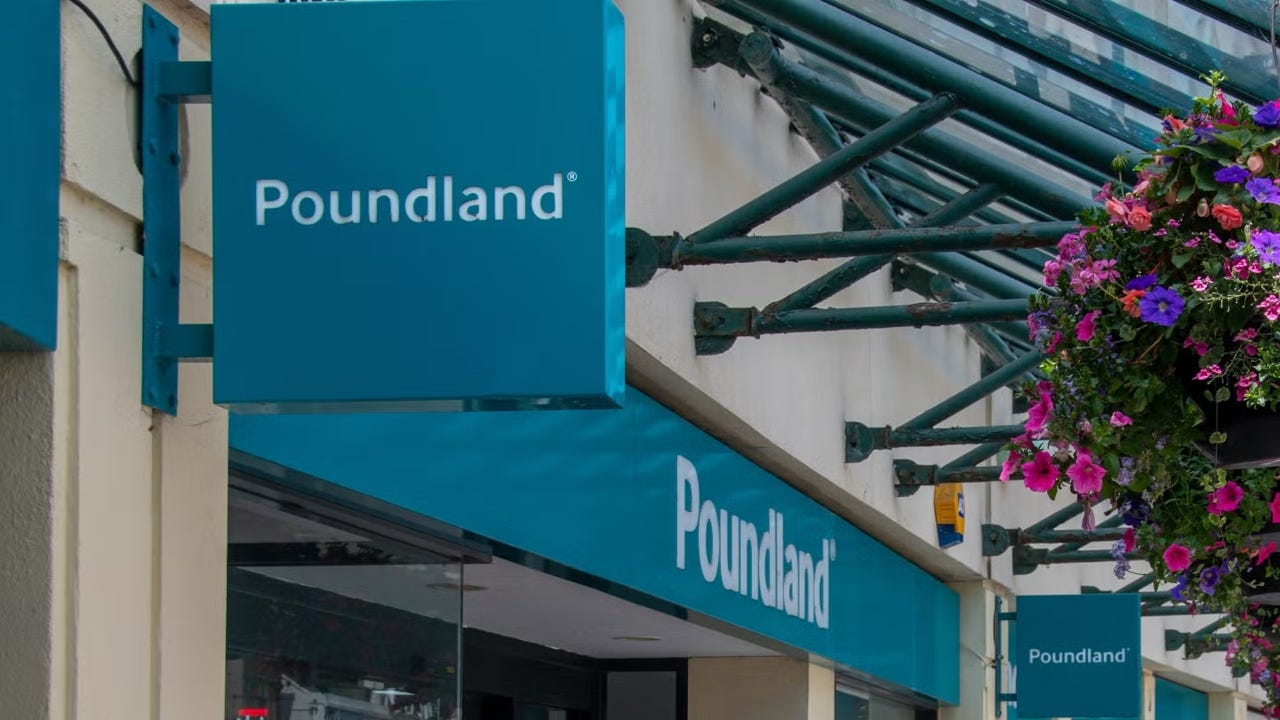
Poundland has spent the past few weeks teetering on the edge of administration. Around 12,000 people work for it, in roughly 600 shops. It was bought for £1 last year by Gordon Brothers. Then a bid arrived for the whole business from Martin Property Group, the owner turned it down, and a notice of intention to appoint administrators followed. The sticking point, reportedly, was a £30 million shareholder loan the bidder would not fully clear.
Gordon Brothers says it put significant working capital at risk to narrow a loss of around £70 million, and that it is working to preserve stores and jobs. Investors are entitled to want their money back. Capital that can’t earn a return stops flowing, and a retailer that can’t attract investment can’t open anything.
Andrew's Retail Reflections is a reader-supported publication. To receive new posts and support my work, consider becoming a free or paid subscriber.
But the episode sharpens a question every retailer should answer honestly. What is the business of being in business?
The textbook answer, famously given by Milton Friedman, is that the responsibility of business is to increase its profits. On that view an owner is simply doing the job: maximise the return, and leave society’s problems to government and charity.
I have spent more than 25 years in and around retail, and I think that answer is not so much wrong as hopelessly incomplete.
Profit is a result. It is what’s left when a business has done its job well enough, for long enough. The job itself is something else: serving customers, employing people, paying suppliers and being a reliable presence in the place where the shop is located. Peter Drucker explained it as: the purpose of a business is to create a customer. Nobody has ever walked into a shop to maximise a shareholder’s return.
Think about what a store actually does. For many people it is a first job, or work that fits around caring responsibilities, or a way back into employment. It trains young people in things that never leave them: turning up, dealing with customers, handling cash, working in a team. It keeps a high street occupied and open for those who can’t drive to a retail park. None of that is on the profit and loss account, but all of it is value, created every day.
British law doesn’t treat shareholders as the only constituency either. Section 172 of the Companies Act asks directors to promote the success of the company for its members, but to have regard to employees, suppliers, customers, the community and the environment as they do so.
That’s why the questions MPs put to Gordon Brothers Head of EMEA, Mark Newton-Jones earlier this month matter. The business and trade committee’s chair, Liam Byrne, said the firm refused to commit to prioritising jobs over its own financial returns. Gordon Brothers says it stands by its pledge to safeguard the workforce. Whatever you make of that exchange, it is the right question to ask of any owner. Nobody should expect a private owner to run a charity. But they should expect an owner to understand that a going concern with 12,000 staff is worth more than the sum of its debts, and that breaking it up to recover a loan may be a poor business decision, never mind a poor moral one.
There’s a hard-headed point here too. Companies that look after their people, customers and communities tend to trade better and for longer. Those that treat people as a cost to be minimised, and communities as a market to be harvested, tend to run out of both.
None of this means profit doesn’t matter. A business that loses money for long enough can’t employ, train or give anything to anyone. Profit is the oxygen. But nobody lives to breathe.
I truly believe that the business of being in business is to provide work, to train the next generation, to serve and strengthen the places it trades in, and to do some good along the way. Profit is the reward for doing that well, and the discipline that keeps it honest. Reverse the order and you end up with an asset to be stripped rather than a business to be built.
Whatever happens to Poundland, it won’t be the last time we ask the question. We should have the answer ready.
Andrew's Retail Reflections is a reader-supported publication. To receive new posts and support my work, consider becoming a free or paid subscriber.